 Image 1 of 4
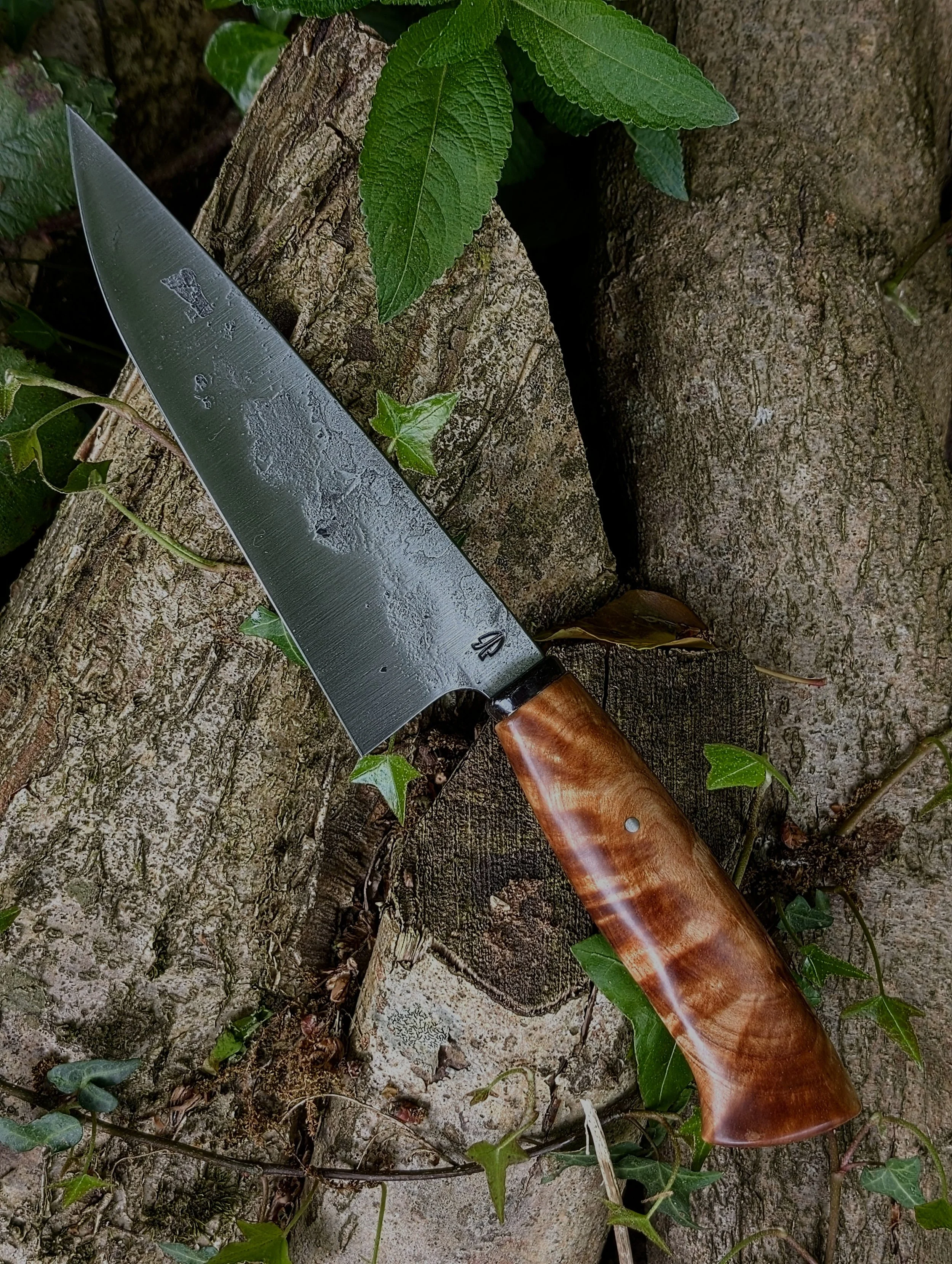 Image 2 of 4
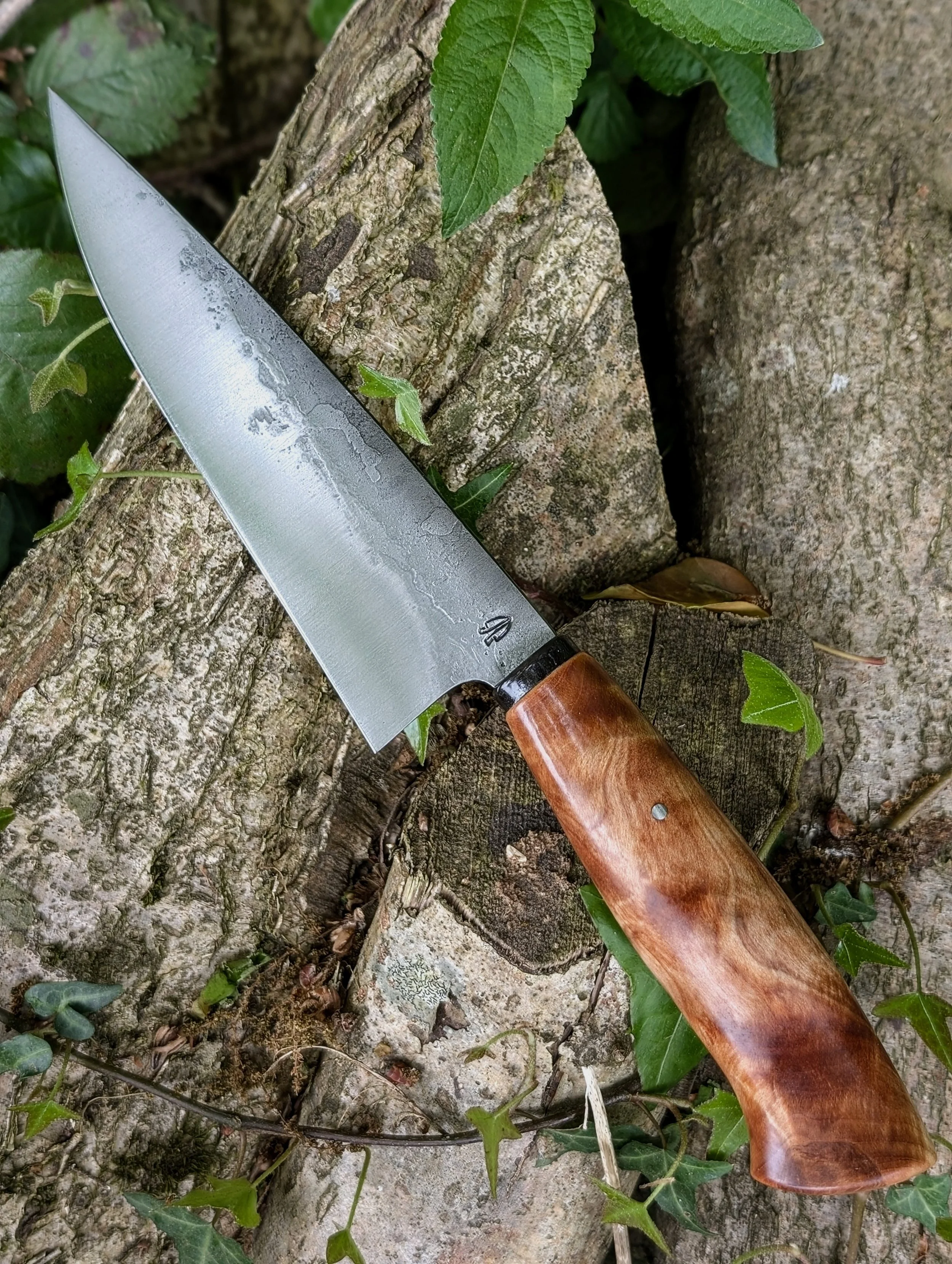 Image 3 of 4
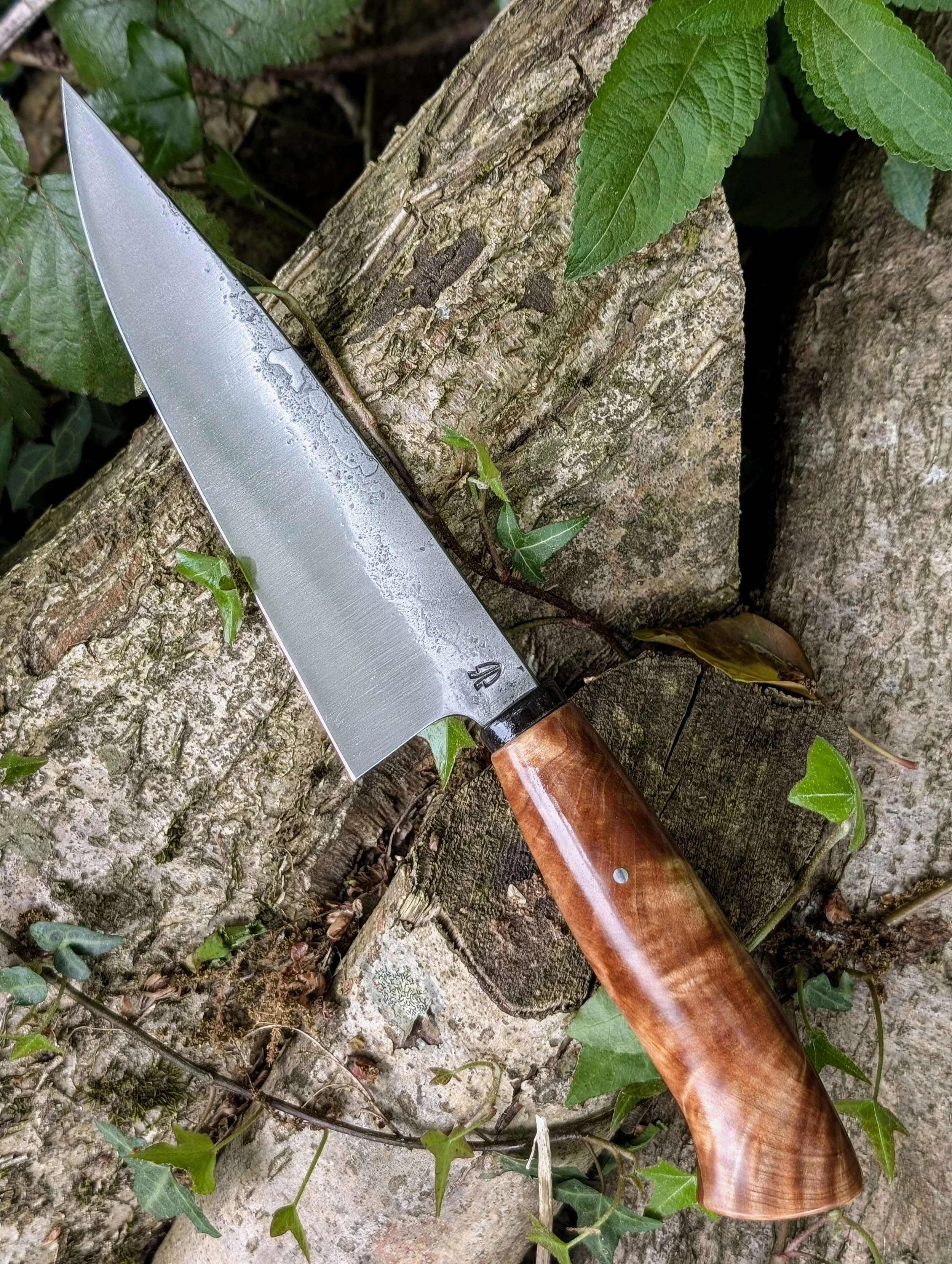 Image 4 of 4
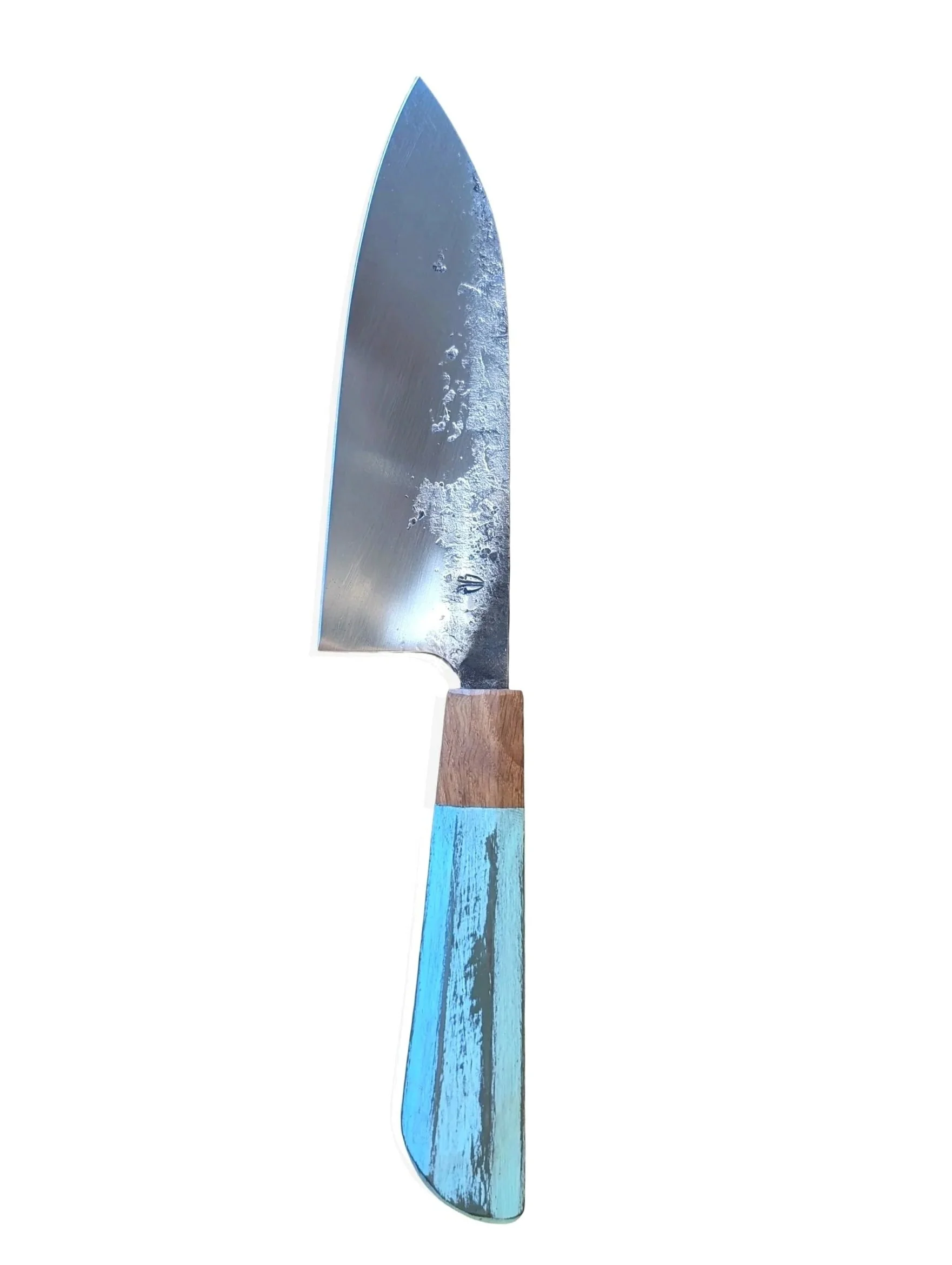
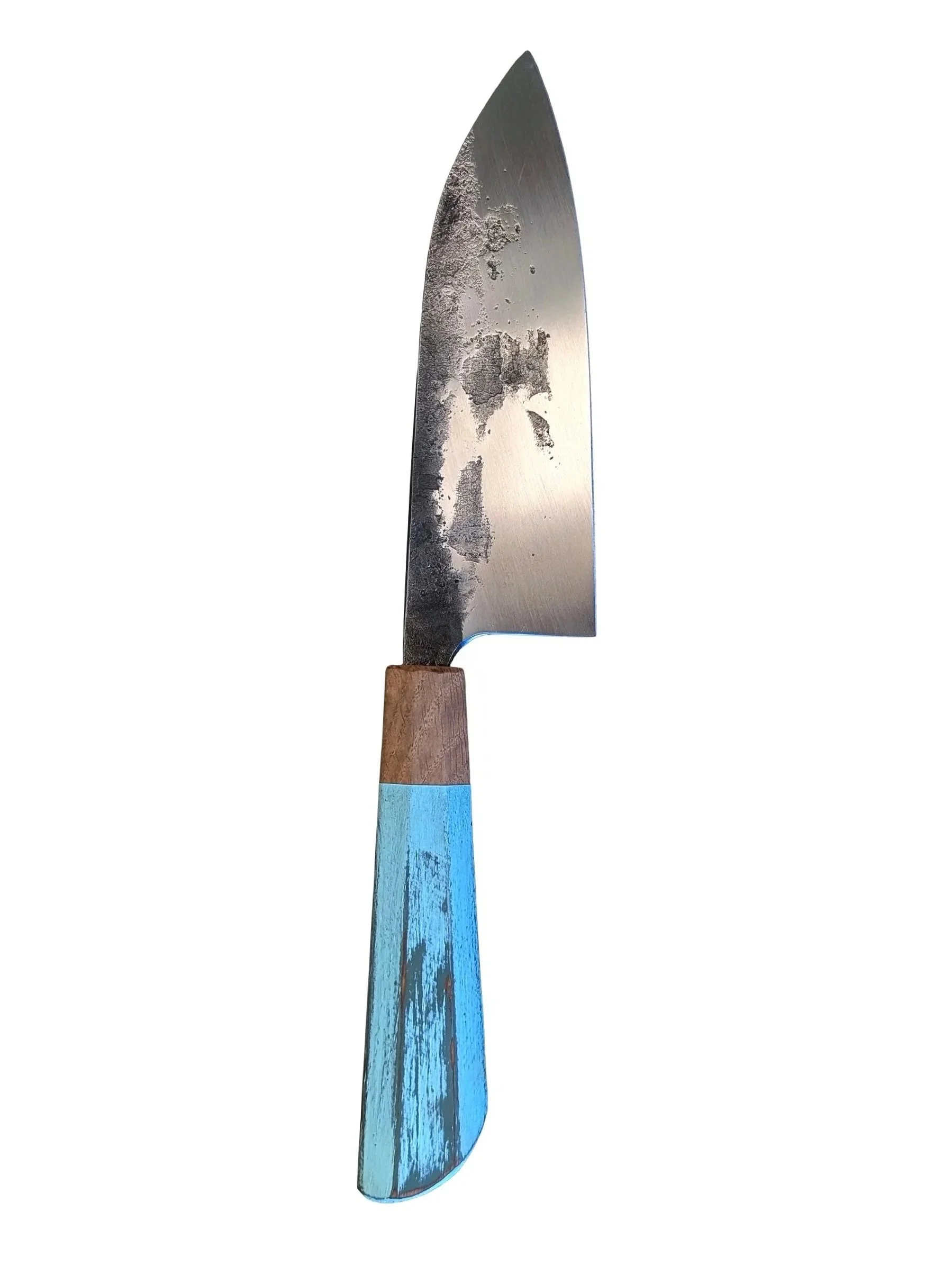
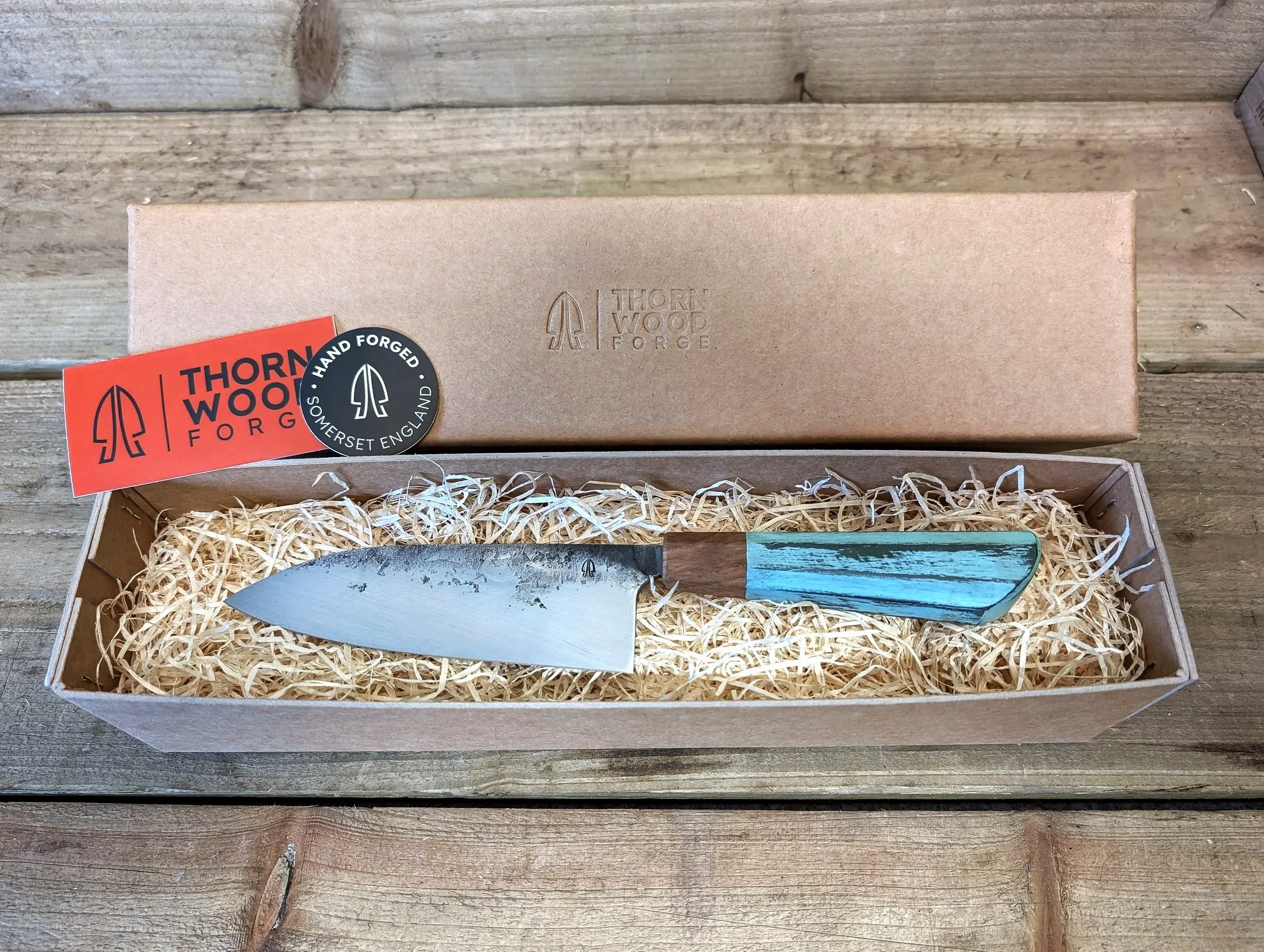
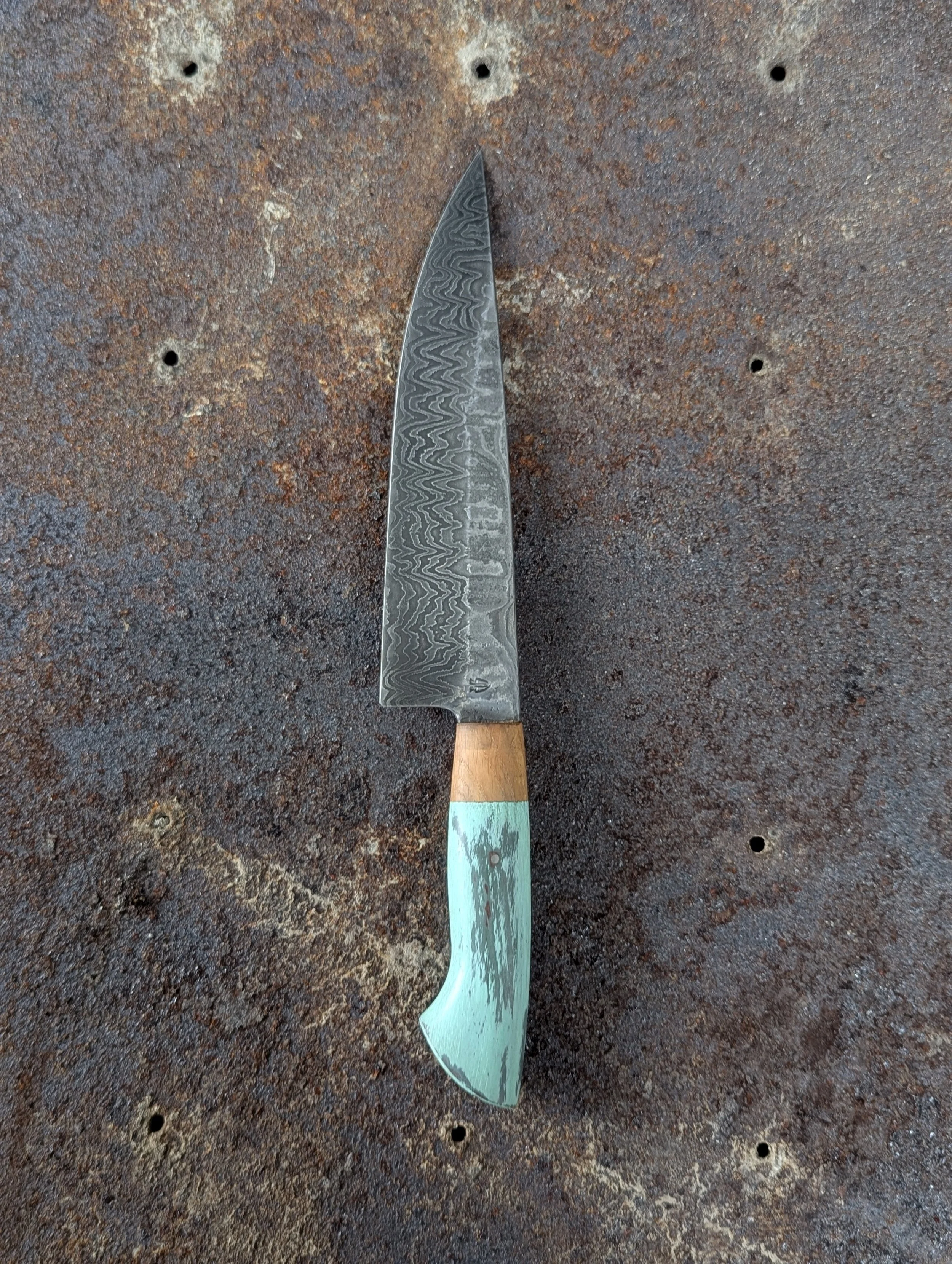
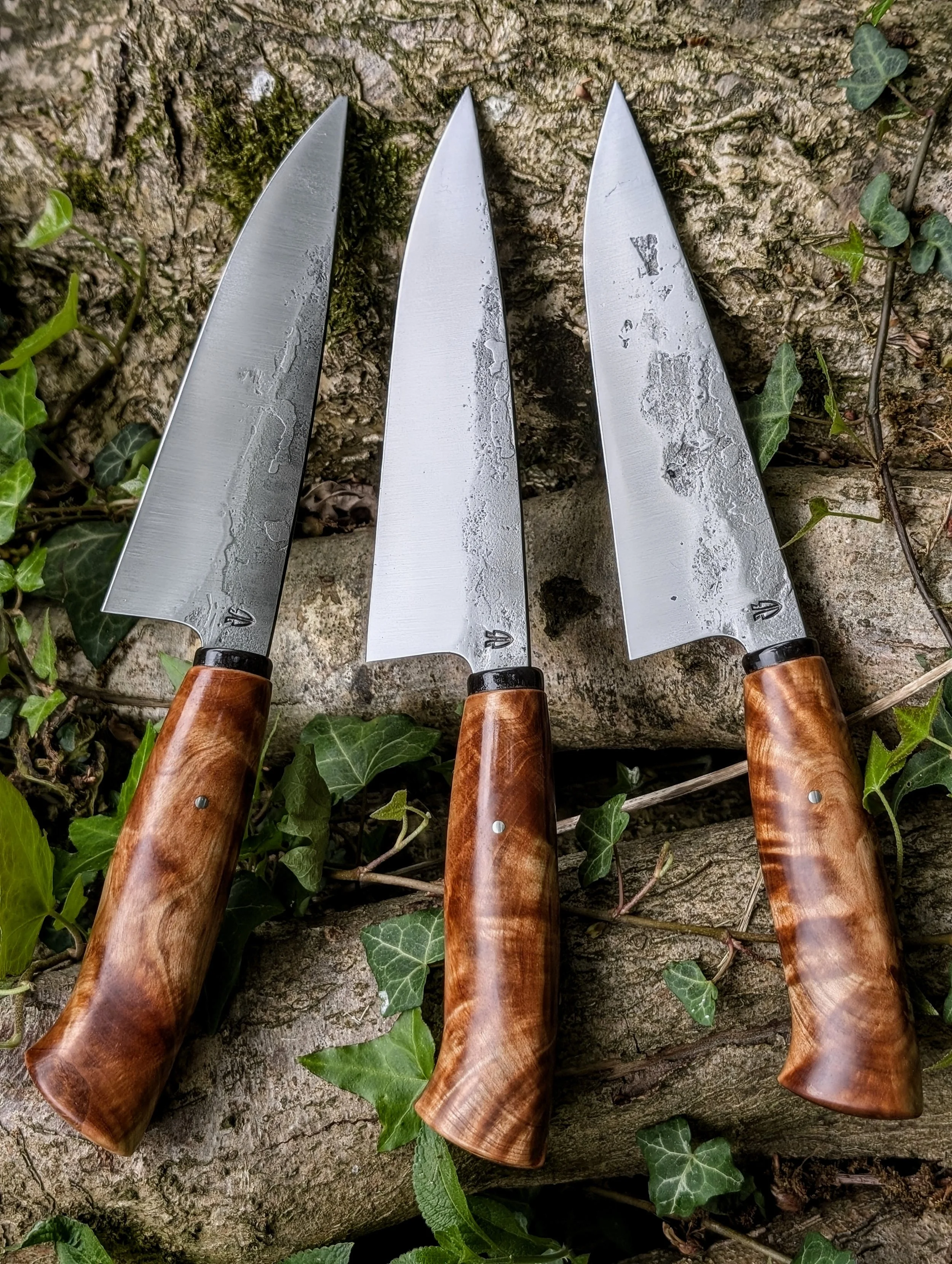
Steel - Hand Forged 80CRV2
Buffalo Horn Bolster
Chatoyant English Birch Burr Handle
Western Chefs Knife Profile
2.3mm spine with a distal taper
Blade length: 6.3'“
The Story:
Years ago, while walking through woodland in Surrey after heavy rain, we noticed an old Birch Burr half buried in the leaf litter beside a felled tree, assumed off-cuts from the heavy forestry work in the area. Most people would probably have walked straight past it, but something about the shape and weight of it felt unusual so we carried it back to the workshop. It sat there for years, slowly drying on a shelf in the forge, gathering dust and occasionally being turned over in our hands, always wondering what might be hidden inside.
When we finally decided to cut into it more than five years later, the first split revealed a figure none of us expected — dense swirling grain with an almost liquid depth to it. As the wood caught the light, the surface seemed to shift and move, a rare effect known as chatoyance, where the fibres reflect light in different directions like silk or polished stone. We’ve worked with a lot of burr timber over the years, but never another piece quite like this one.
There was only a small amount of solid material inside once the voids and cracks were cut away. In the end, enough remained for just three knife handles. Rather than trying to stretch it further, we left it at that — three knives made from a single forgotten piece of woodland Birch, each one carrying a different part of the same grain.
Steel - Hand Forged 80CRV2
Buffalo Horn Bolster
Chatoyant English Birch Burr Handle
Western Chefs Knife Profile
2.3mm spine with a distal taper
Blade length: 6.3'“
The Story:
Years ago, while walking through woodland in Surrey after heavy rain, we noticed an old Birch Burr half buried in the leaf litter beside a felled tree, assumed off-cuts from the heavy forestry work in the area. Most people would probably have walked straight past it, but something about the shape and weight of it felt unusual so we carried it back to the workshop. It sat there for years, slowly drying on a shelf in the forge, gathering dust and occasionally being turned over in our hands, always wondering what might be hidden inside.
When we finally decided to cut into it more than five years later, the first split revealed a figure none of us expected — dense swirling grain with an almost liquid depth to it. As the wood caught the light, the surface seemed to shift and move, a rare effect known as chatoyance, where the fibres reflect light in different directions like silk or polished stone. We’ve worked with a lot of burr timber over the years, but never another piece quite like this one.
There was only a small amount of solid material inside once the voids and cracks were cut away. In the end, enough remained for just three knife handles. Rather than trying to stretch it further, we left it at that — three knives made from a single forgotten piece of woodland Birch, each one carrying a different part of the same grain.